Mag Wildwood
Breakfast at Tiffany'sMag Wildwood is an Arkansas-born cover model who makes conspicuous difference into a form of social confidence: unusually tall, strikingly styled, and stammering, she arrives at Holly Golightly’s gathering as a rival for attention and soon becomes her traveling companion. Her story moves between intimacy and competition, an uncertain conversation about marrying José Ybarra-Jaegar, and a later marriage to Rusty Trawler; when Holly is arrested, Mag disavows her in openly hostile terms.
Entrance and Self-Presentation
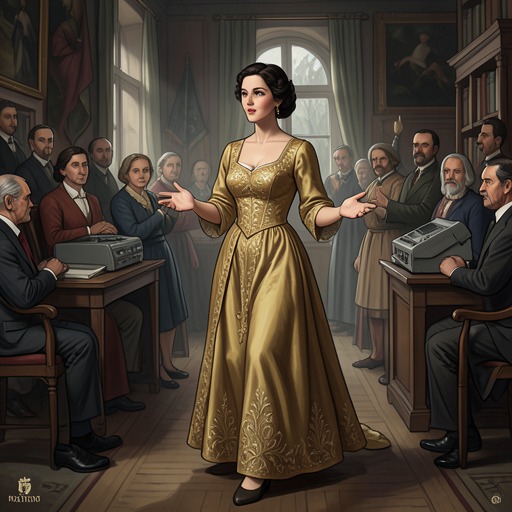
Mag first bursts into Holly’s gathering in a rush of scarves and jangling gold, accusing Holly of hoarding the men present. Her arrival turns the room toward her: men straighten their backs and draw in their stomachs to meet her swaying height. The scene makes her both comic and commanding before she has established anything about herself beyond her name and presence.
Introducing herself to O. J. Berman, she gives her name as Mag Wildwood, from Wildwood, Arkansas, and calls it hill country. Her stutter is immediately conspicuous, but it does not simply diminish her authority. The narrator describes her as a triumph over ugliness: she accentuates her height with heels, wears her hair pulled straight back, and chooses a tight bodice that emphasizes her spare, fashion-model figure. Rather than conceal what might be judged defects, she turns them into elements of a recognizable style. Her stammer likewise makes ordinary remarks sound distinctive and encourages men to take a protective role; when she asks where the bathroom is, Berman ends up offering his arm to guide her.
That performance is not presented as wholly artificial. The stutter is described as genuine, though sometimes slightly emphasized. Mag’s social skill lies in making a real vulnerability work in her favor without allowing it to define her as helpless. In the gathering, she is quickly passed among admirers, her jokes received eagerly, while Berman tries to keep rivals from cutting in. Her entrance thus establishes the mixture of calculated presentation, spectacle, and social ease that shapes her role around Holly.
Companionship with Holly
The connection between the women takes on a more settled form when Holly explains that her mailbox card says she and Mag are traveling together. The change gives a concrete sign to their shared mobility: the card originally announced Holly as traveling, and now Mag’s name has been added. It indicates companionship, but not a fixed home or a settled future; the word traveling remains central to the identity displayed at the mailbox.
On a warm Sunday, Mag and Holly lie together on a blanket on the fire escape, with Holly’s cat between them. Their newly washed hair hangs lankly; Holly varnishes her toenails while Mag knits a sweater. The scene is domestic in its small occupations, but it takes place outside the apartment, in a makeshift resting place consistent with the women’s unsettled lives. Mag’s knitting and Holly’s nail polish give their conversation an everyday ease as they talk about love, nationality, and the prospect of marriage.
Their closeness does not eliminate rivalry. At the party, Mag’s complaint about Holly’s attention to the men makes the competition explicit, while the later traveling arrangement suggests that their association can persist beyond that initial confrontation. The evidence shows companionship and shared space, but not an uncomplicated or permanent bond. Their relationship is therefore defined by proximity and friction together: Mag can lie beside Holly and speak frankly with her, yet she first enters Holly’s social world by challenging her control of it.
Marriage and National Allegiance
During the fire-escape conversation, Mag says Holly is lucky because Rusty Trawler is American. She frames nationality as a point in his favor, then declares herself proud to be American and says that this is why she feels sorry about José. Her joking political language gives way to a real concern: marrying José would mean becoming Brazilian and crossing a distance of six thousand miles without knowing the language.
Mag does not treat that prospect as a simple romantic decision. She wonders aloud whether she could adjust to marrying a Brazilian and becoming one herself, then proposes that her only chance is to persuade José to forget politics and become an American. His ambition to become president of Brazil strikes her as an impractical obstacle. Yet she also acknowledges that she may be madly in love with him and asks Holly to judge whether she is. The conversation leaves the tension unresolved: attraction draws her toward José, while national identity and the imagined demands of marriage make the choice feel like a gulf to cross.
The marriage that ultimately enters the public record is instead to Rusty. The narrator learns from a newspaper that Rusty’s bride is the cover girl from the Arkansas hills, Miss Margaret Thatcher Fitzhue Wildwood. The formal name identifies Mag behind her familiar shortened name and striking public image. The news first frightens the narrator, who mistakes Rusty’s marriage for evidence that Holly might have married him; the revelation that the bride is Mag brings immediate relief. Her marriage therefore resolves the earlier conversation’s comparison of the two men in a way the scene itself does not predict: the book records Mag as Rusty’s bride, not as José’s.
Disavowal and Narrative Role
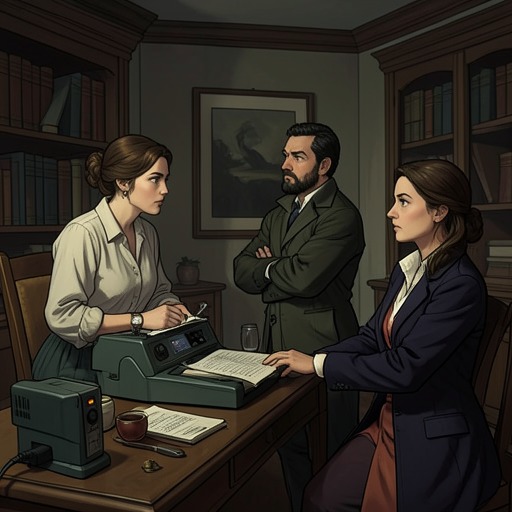
Mag’s later appearance is through a telephone call made after Holly’s arrest in the Sally Tomato drug case. The Unnamed Narrator and Joe Bell try to find people who might help Holly. After Rusty Trawler’s butler says that Mr. and Mrs. Trawler are at dinner, Joe Bell insists that the matter is urgent; the call reaches Mag, now Rusty’s wife. Her response is not assistance but repudiation. She threatens a lawsuit if anyone connects the Trawlers’ names with Holly, calls Holly a drug user and a degenerate, and says that prison is where she belongs.
The contrast with the earlier scenes is sharp. Mag had once shared a blanket and private conversation with Holly, traveled with her, and appeared as a companion whose presence was entered on the mailbox. Now she uses her married name and public respectability as a boundary, insisting that she and her husband have no connection to Holly. Her words do more than refuse a request: they recast the former companion as someone from whom the Trawlers must protect their reputation. The account establishes this defensive rejection, not Mag’s private reasons for it.
Mag’s brief arc makes companionship look contingent on circumstance. She can be socially bold when attention is available, candid with Holly about the cultural and political questions of marriage, and later emphatic in distancing herself from Holly when association carries danger. Because the reader first encounters her through the Unnamed Narrator’s observant, often amused description, her appearance and conversational style are vivid; her inner life remains comparatively limited. The two recorded turns—her marriage to Rusty and her denunciation of Holly after the arrest—supply the decisive counterpoint: the woman who once traveled beside Holly ultimately refuses to stand beside her in public.